Mosh App
Industry
Scope of work
/ Ideation & Concept
/ Market Research
/ UI & UX
/ Visual Design
/ Branding
/ Motion
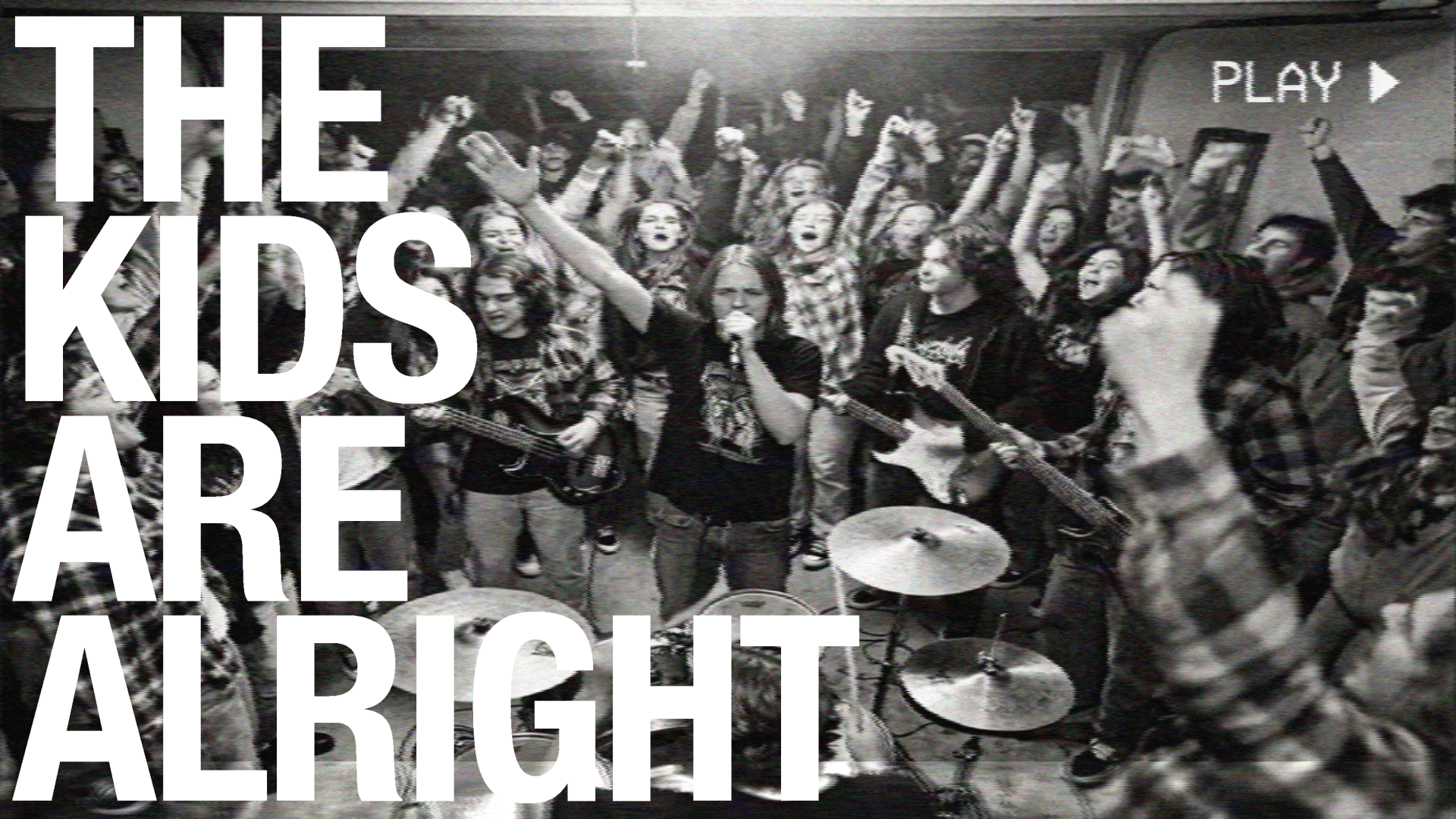
The bedroom producer replaced the garage band.
I grew up in Portugal in the 90s playing in bands. Finding bandmates
meant photocopied flyers on the school boards, forum posts and word of mouth.
It was raw and local. Today every teenager has a studio in their bedroom.
A laptop and a USB interface. The tools to make music have never been more accessible, and yet fewer and fewer teenagers are playing together in rooms.
The apps that exist in this space are built for already working musicians networking their way to a career. They wrap the problem in social media logic - profiles, followers, likes, leaving kids behind.
MOSH is a ghost project - designed entirely solo, from concept to working prototype, to answer one question: what would a band-finding app look like if it was designed to get teenagers off their phones, out of their bedrooms and into rehearsal rooms?
A 17 year old who wants to start a band doesn't need a platform. They need a drummer who lives nearby and is free on Saturday.
Every existing solution - Vampr, Bandit, BandFriend - makes the same mistake. They put the person at the centre. Profile photo, follower count, instruments listed like a CV line.
The result is a social performance anxiety machine - a dating app with guitars.
The right question isn't "who are you?", it's "what do you want to play, and when?"
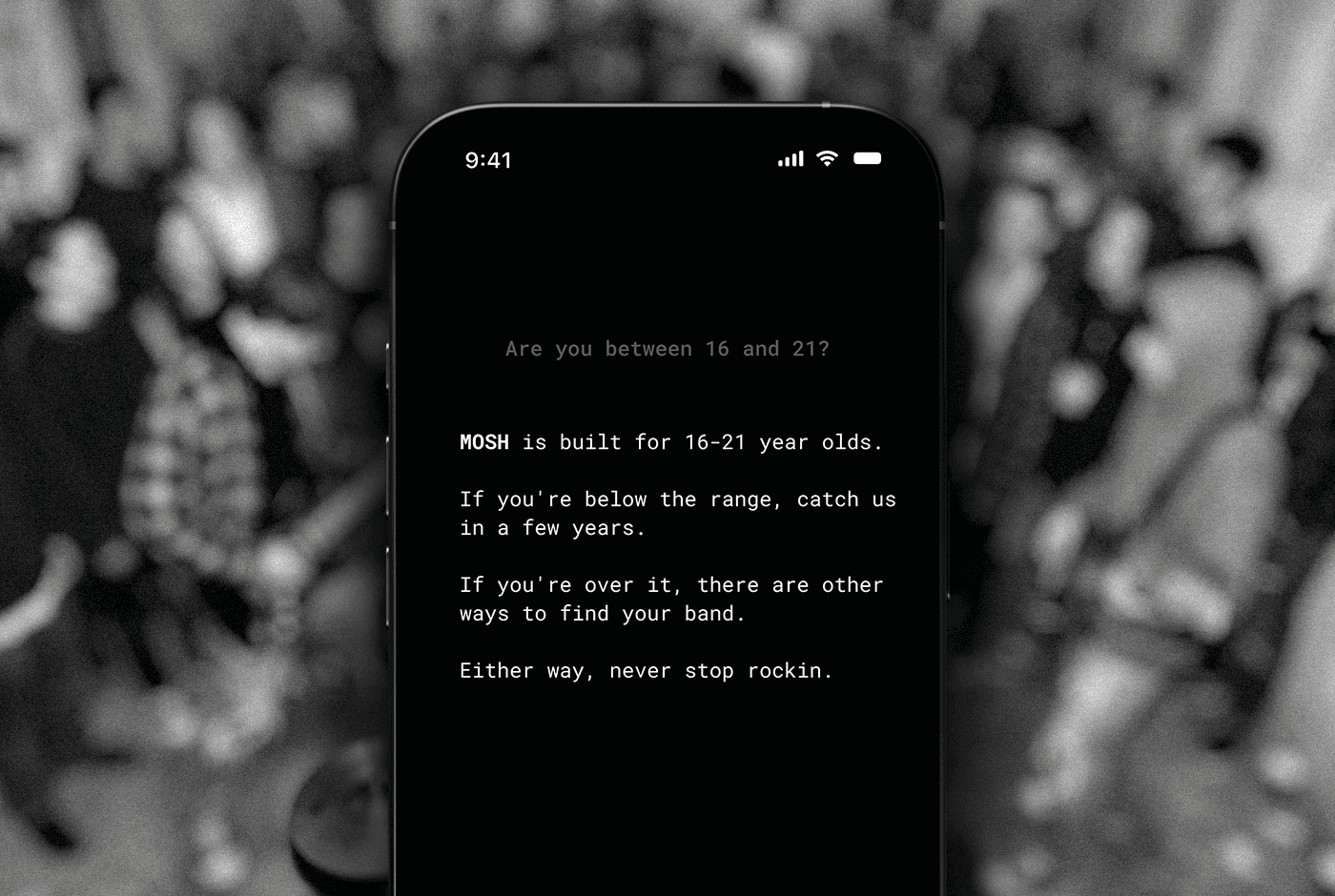
MOSH is an anti-app.
No likes. No followers. No video uploads. No show-off culture. No swipe mechanics. No algorithm. No notifications designed to bring you back for nothing. No social feed. No tab bar. No "casino" type sounds or animations to hijack your dopamine.
Every single one of these absences is a deliberate design decision.
The app has one job: connect a teenager who plays guitar with a teenager who plays drums, in the same city, so they can meet in real life and make noise together.
When that happens, MOSH has succeeded.
That is the measure of success.
That's the opposite of how almost every app in existence is designed. And that's exactly the point.
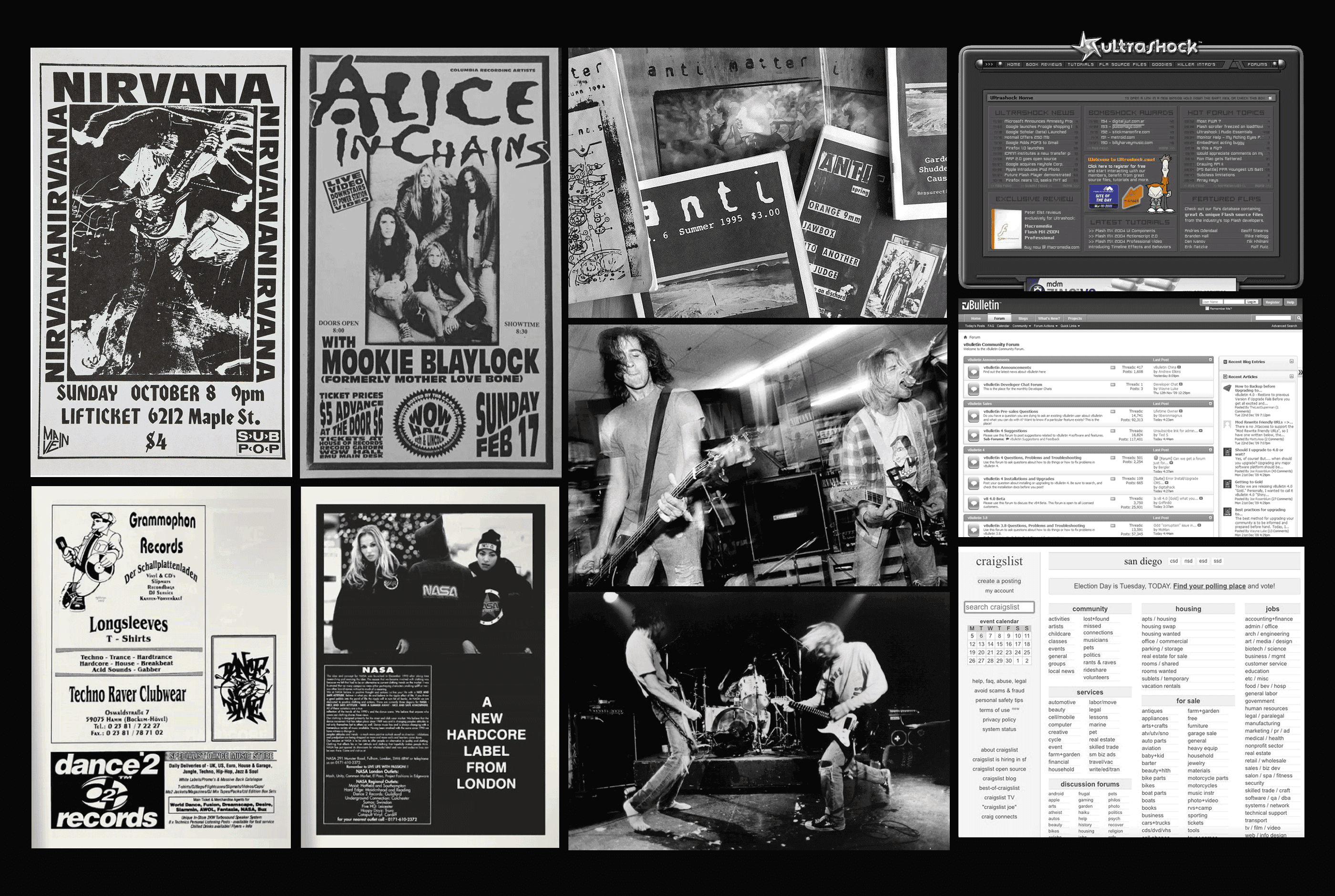
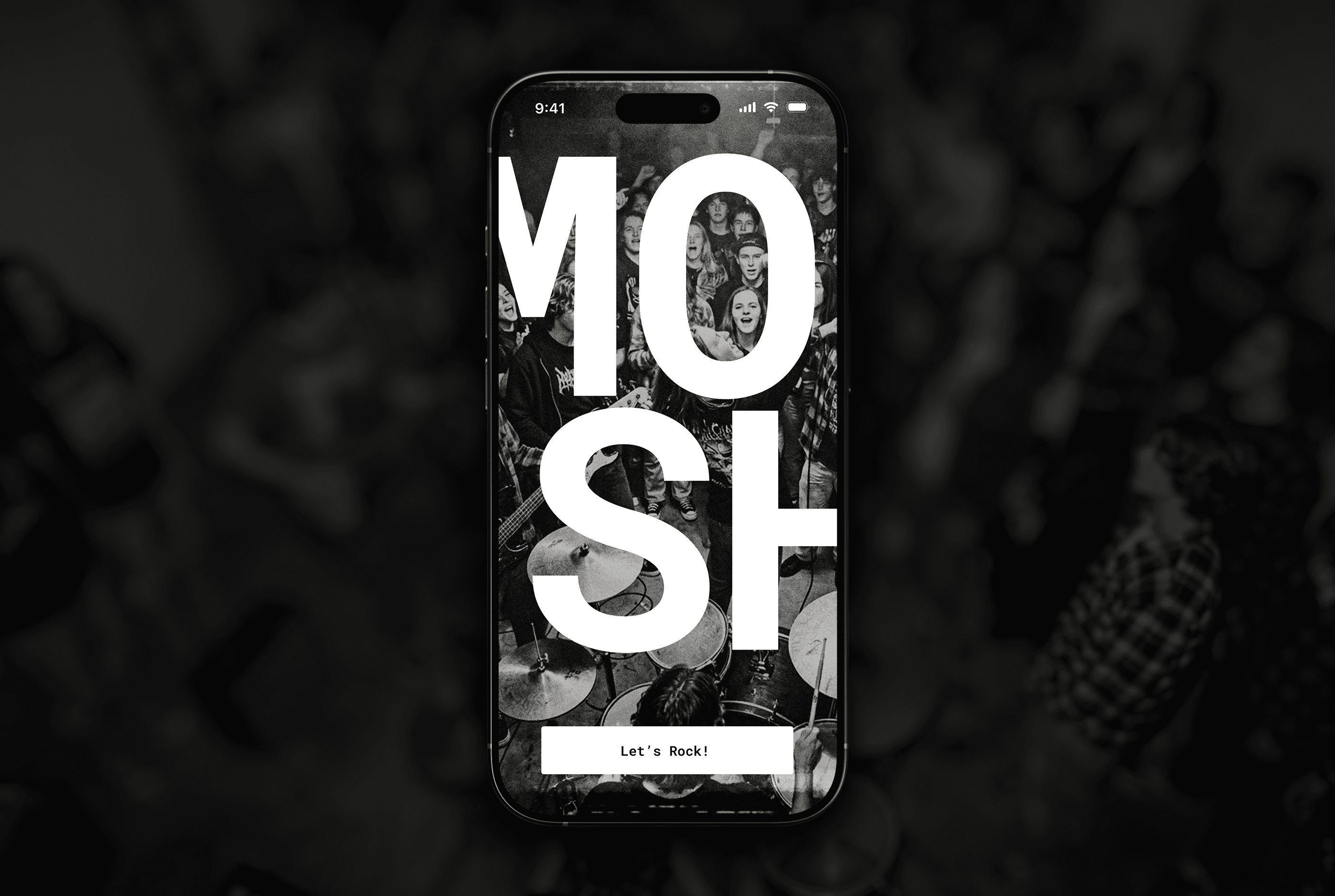
MOSH visual language is inspired mainly by fanzine print design and old 90's webforums.
These references were raw, typographic, and completely unconcerned with looking polished.
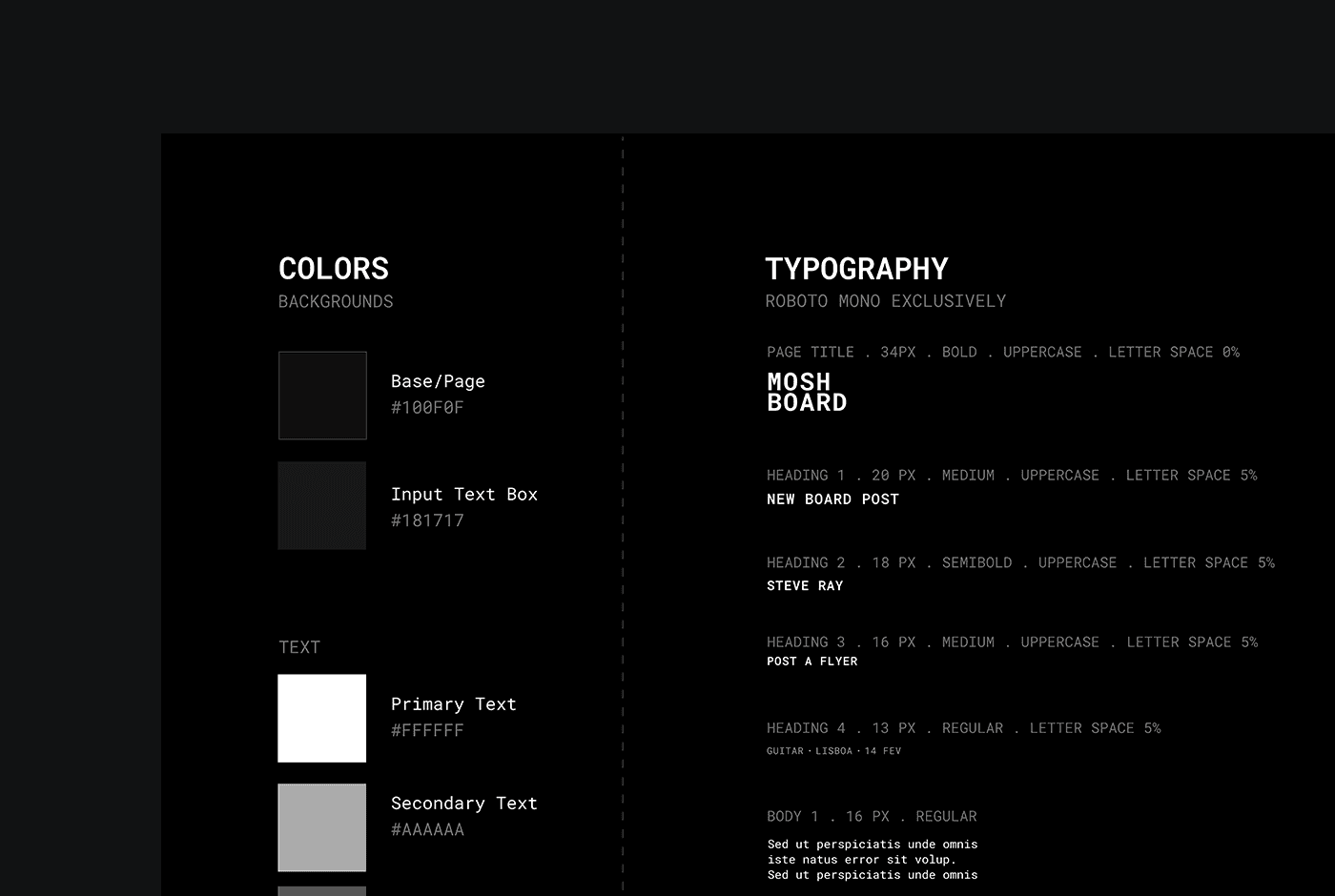
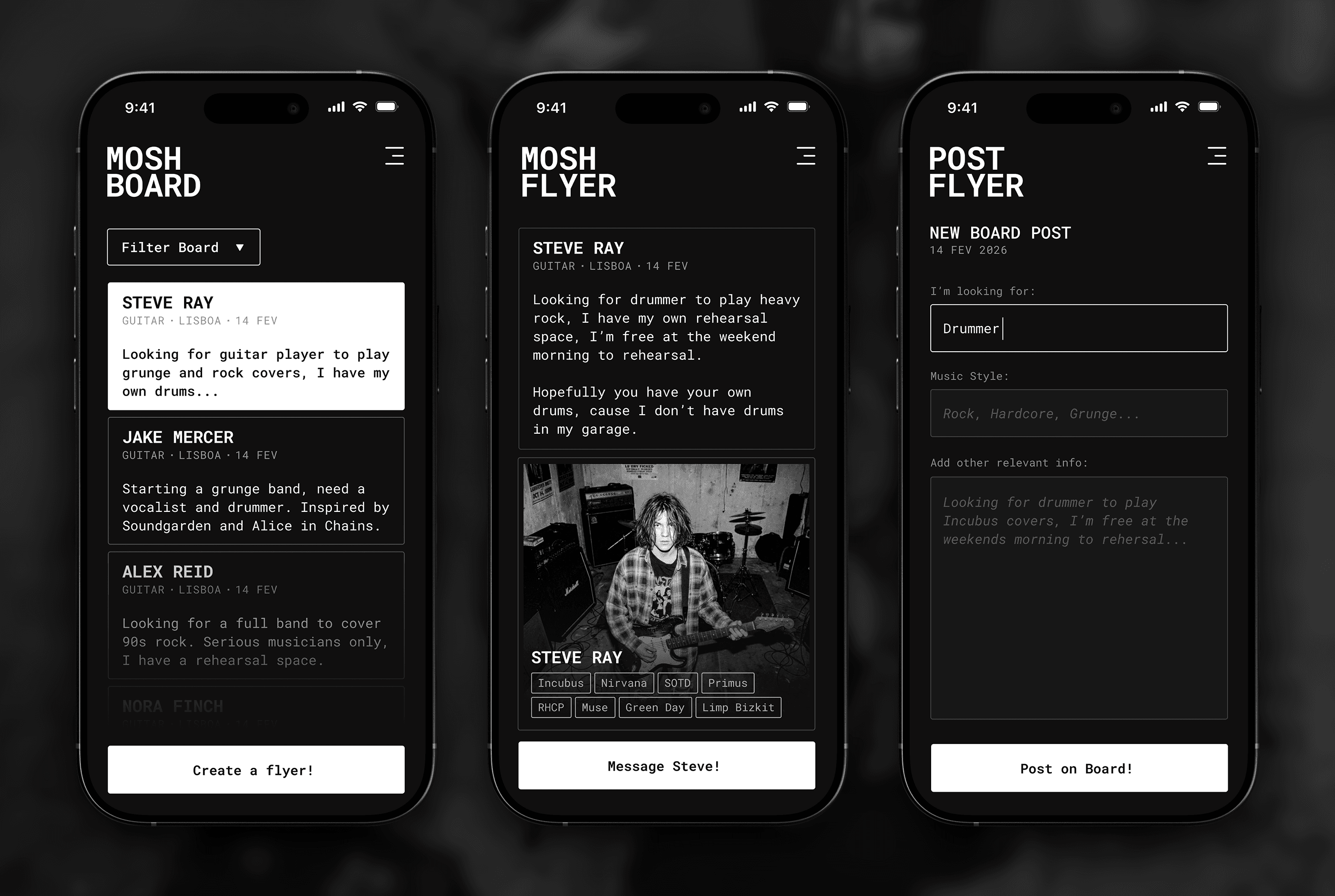
Sure, the formula was adapted - stripped back for readability, tightened for mobile. Monospace type exclusively. Black and white only. Hierarchy through weight, size and contrast. No overuse of icons, no gradients, no rounded corners for "friendlyness".
The result feels like a 90s web forum and a 2026 mobile app at the same time - familiar enough to be intuitive, different enough to show a new generation a type of app they've never seen before.
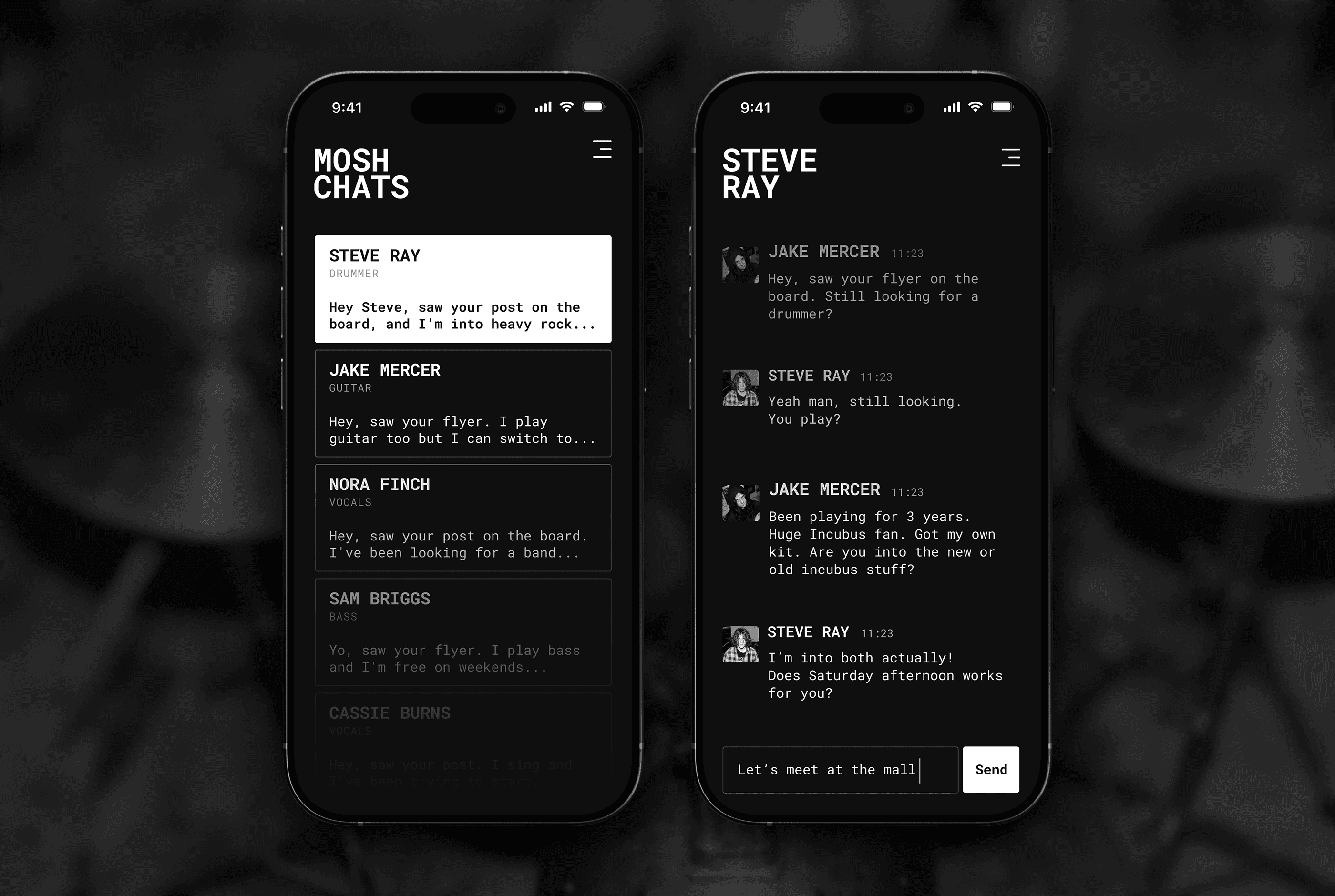
Exactly what it should look like.
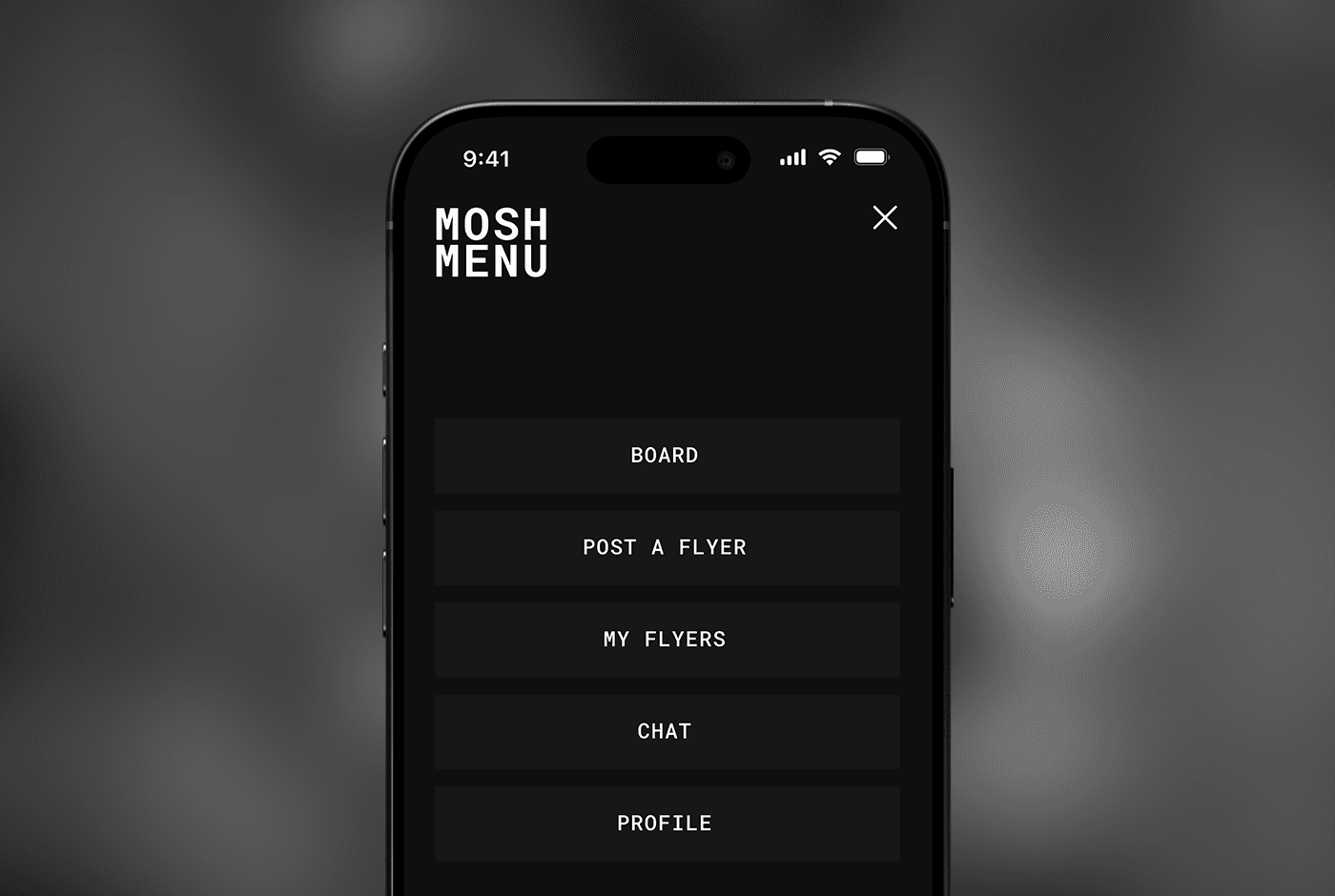
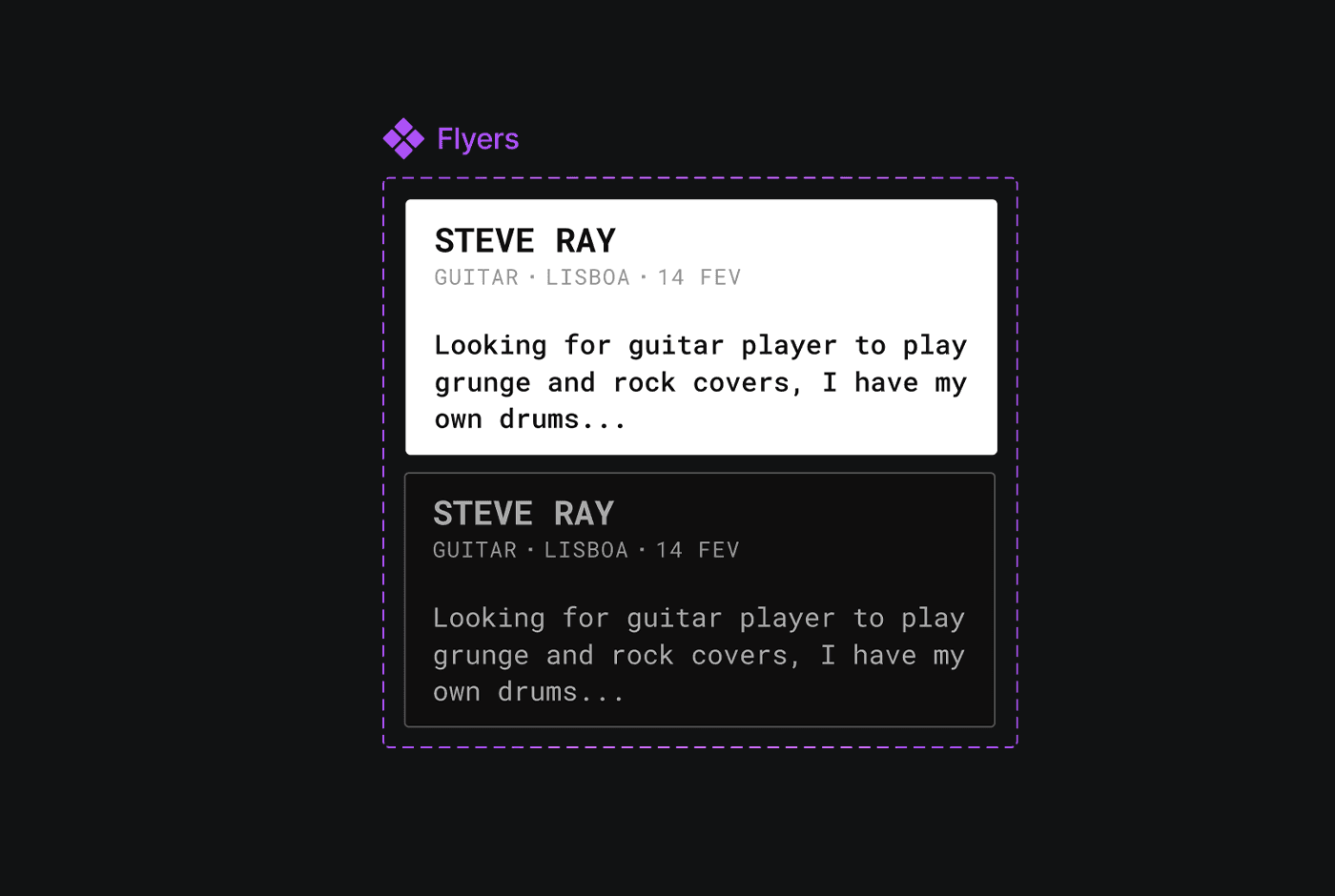
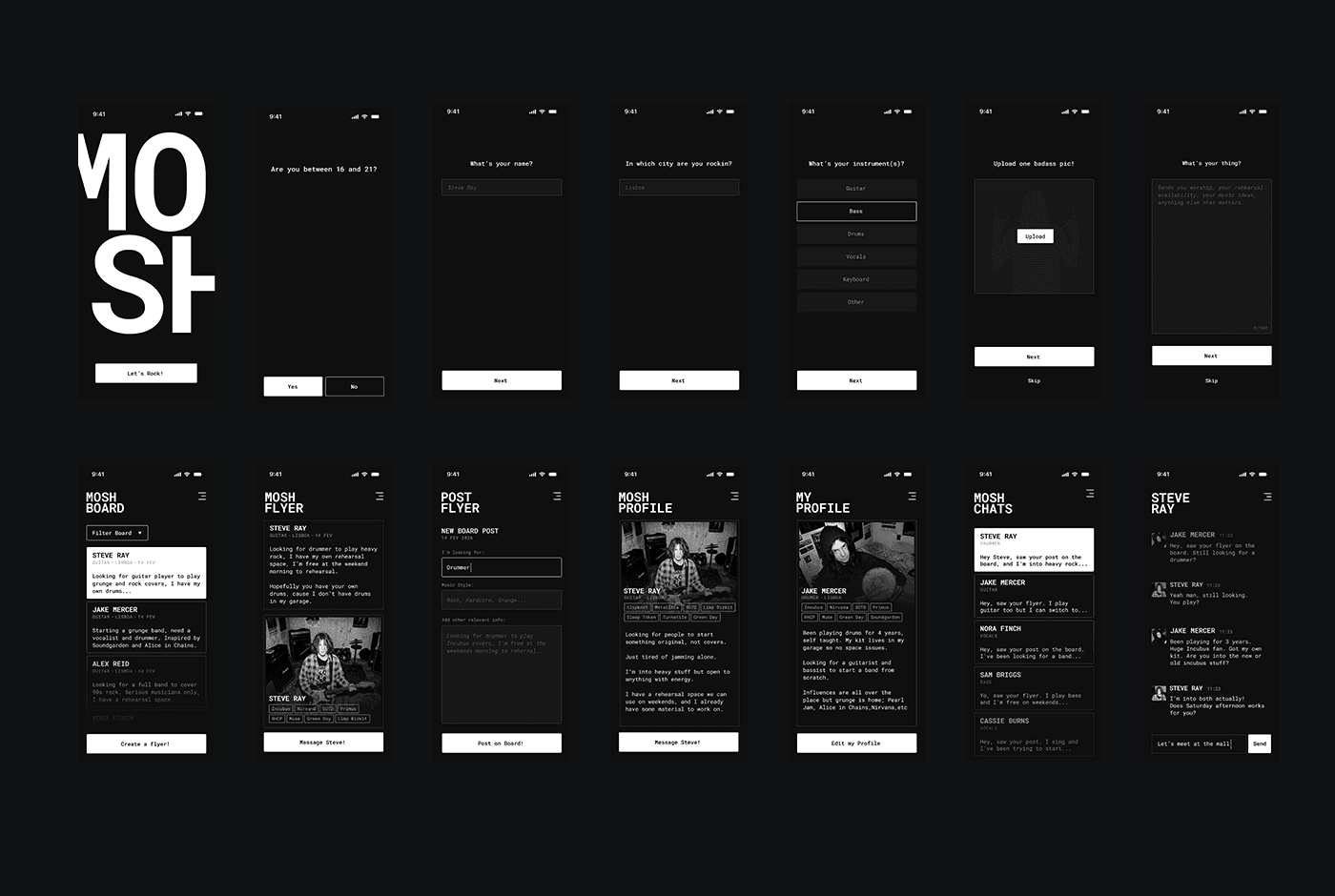
The Board: The primary object in MOSH is not a profile. It's a call - the flyer. Someone posts what they play, what they need, and what they're about. The board shows these calls in chronological order, newest first. No algorithm, no recommendations, no "people you might know."
The Flyer: Tap a call and you see the full flyer. Raw text, music influence tags, one action: Message. That's it, no likes, no comments, no public replies. Just a direct line to the person.
The Chat IRC-style: No bubbles, no read receipts, no file sharing. Text only - by design. The chat exists to coordinate one thing: when and where to meet.
The Profile: One single photo, instrument, city, a short bio in their own words. No follower count, no grid, no metrics of any kind.
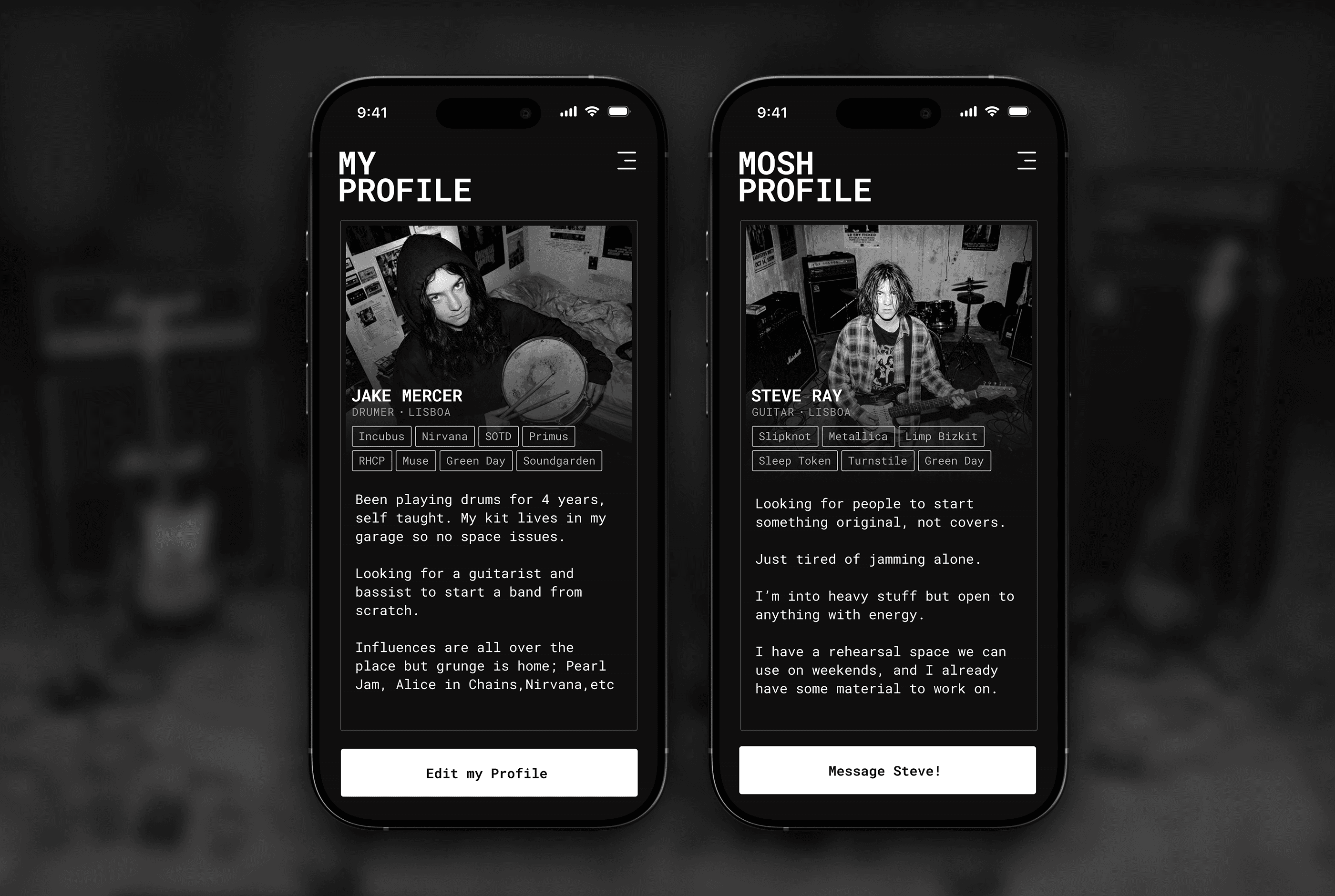
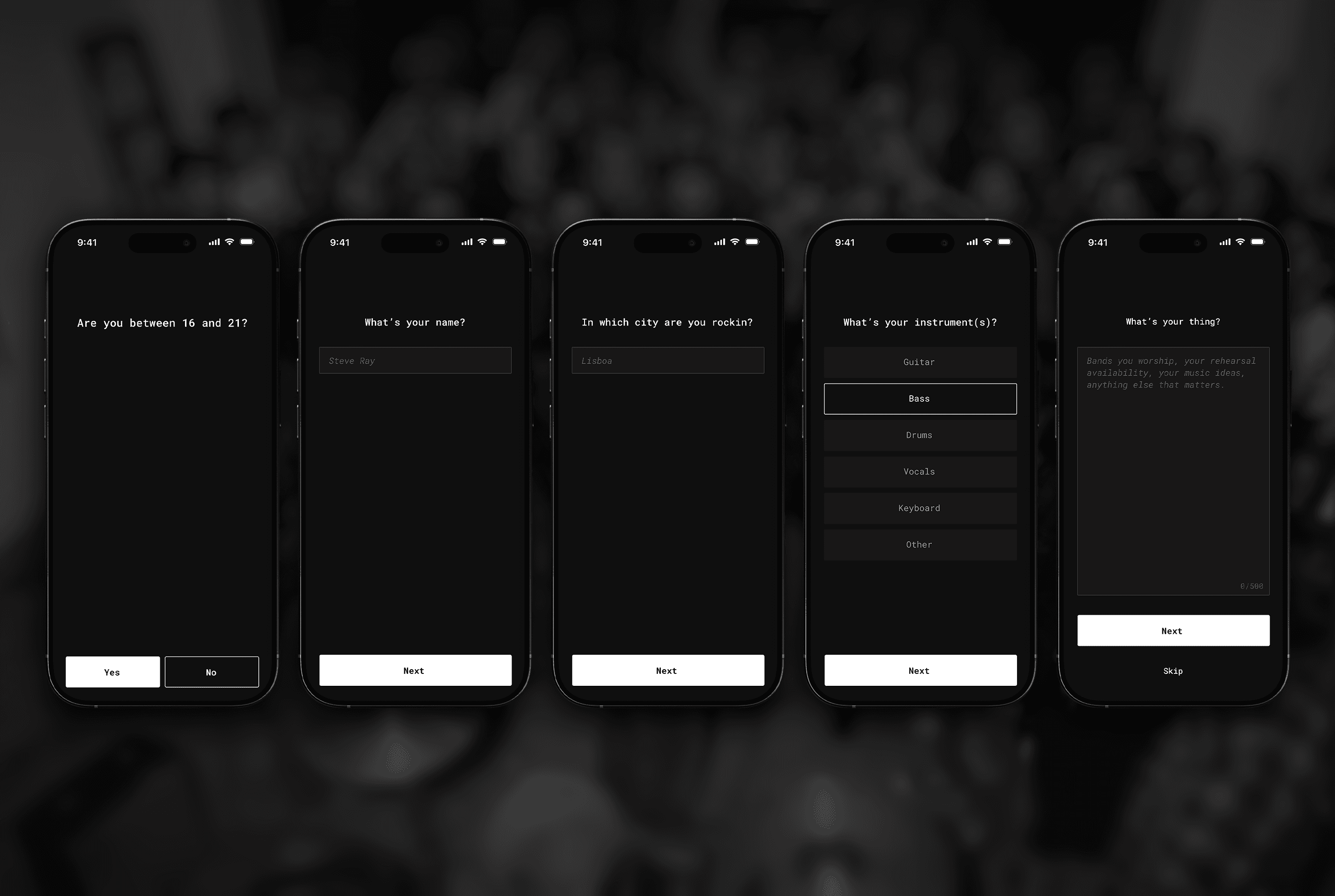
Try it.
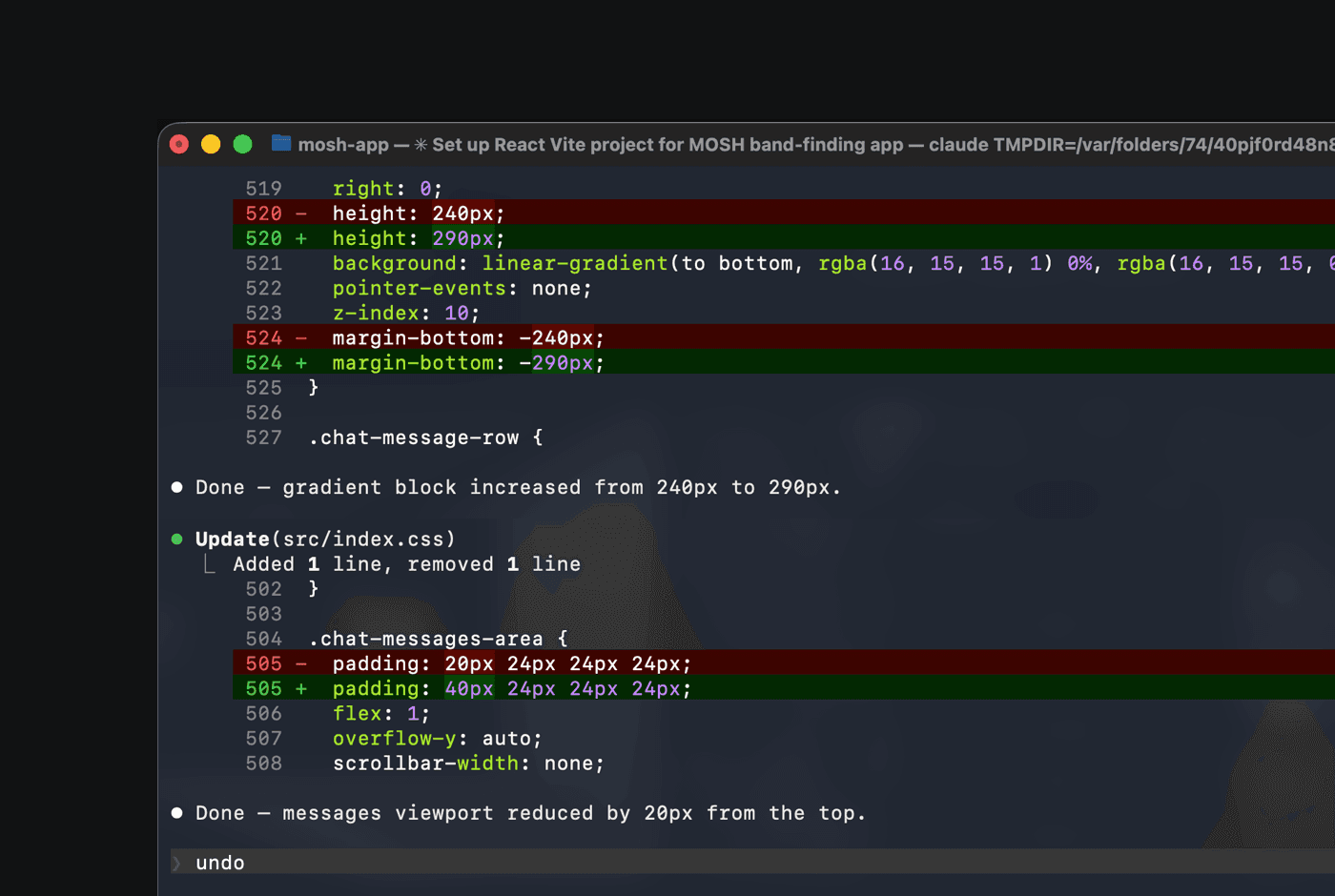
A rough MVP built with Claude Code - no developer, no manual coding, just design translated into a working prototype through conversational AI with Claude Code.
The building process.
01. Concept & Strategy - idea, brand direction, naming, tone of voice. Then Claude.ai for market research and competitor analysis.
02. Design in Figma - wireframes, screens, design language developed through iteration, no AI.
03. Design System extracted using Figma Make - AI reading the finished screens and generating the system documentation, with some end polishing on my side.
04. Prototype built with Claude Code - conversational development, no manual coding, deployed to a live URL with Vercel.
05. Imagery generated with Krea and Nanobanana - 90's analog photography and film aesthetic, AI-generated to match the brand world, polished with Adobe Photoshop and Adobe After Effects.